Day 1: Cusco – Cloud Forest
We depart Cusco early in the morning, traveling through the breathtaking landscapes of the Andes by private transportation. After about 40 minutes, we stop at Huacarpay Lake. This is a great place for birdwatching.
Here, we can see unique birds like the Plumbeous Rail and the Many-colored Rush-Tyrant. We can also spot two special birds: the Rusty-fronted Canastero and the beautiful Bearded Mountaineer hummingbird. This area is home to many Peruvian butterflies, such as the Gulf Fritillary and the Brazilian Painted Lady.
After enjoying breakfast in the charming town of Paucartambo, we continue our journey towards the cloud forests of Manu National Park, reaching the Ajanaco Pass at 3,530 meters above sea level.
Going down on the other side of the pass, we get into high cloud forest, a paradise for bird lovers. You can see colorful flocks of tanagers, the Andean Guan, and the Grey-breasted Mountain-Toucan. You might also spot the White-collared Jay, the Crimson-mantled Woodpecker, and the unique Puna Thistletail. The cloud forest is home to many interesting butterflies, including Clouded Yellows and various types of Skippers.
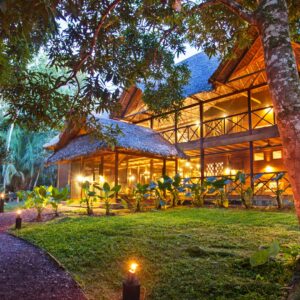
In the evening, we arrive at Bambu Lodge, in the lower parts of the cloud forest. Here we will spend the next two nights in the untouched rainforest of the Manu Biosphere Reserve.
Days 2 and 3: Exploring the Cloud Forest
Over the next two days, we immerse ourselves in the incredible biodiversity of Manu’s cloud forest, exploring various ecosystems along the Manu Road. This area teems with wildlife, offering sightings of mixed-species bird flocks, including toucans, parrots, and vibrant tanagers. With a bit of luck, we may observe the unique Blue-banded Toucanet, Golden-headed Quetzal, Marcapata Spinetail, Red-and-white Antpitta, Barred Fruiteater, and Fulvous Wren, among many others.
Beyond birds, this region is also a paradise for butterfly enthusiasts. We frequently encounter stunning species such as the Blue Morpho and the Owl Butterfly, fluttering through the lush vegetation.
On the third day, we stay close to our lodge. It is in a transition zone between subtropical and upper tropical habitats. This area is about 1,500 meters above sea level.
The highlight of this morning is visiting a Cock-of-the-Rock lek. Here, we can see Peru’s vibrant national bird perform its amazing courtship display.
As we continue exploring, we may come across a variety of tanagers and hummingbirds, as well as the remarkable Versicolored Barbet, Highland Motmot and Green Jay.
These days also offer exceptional opportunities for butterfly observation, particularly species from the Skippers, Daggerwings, Adelphas, and Sulphurs families. Many of these butterflies gather by riverbanks, seepages, and small waterfalls. They absorb important minerals from the wet ground.
DAY 4: Bambu Lodge – Atalaya – Pantiacolla Lodge
We start early to take advantage of the best birdwatching hours between 1,000 and 1,500 meters above sea level. As we descend in altitude, the landscape transitions into a more tropical setting, bringing new bird species into view. We may see: Russet-backed Oropendolas, Crested Oropendolas, Bluish-fronted Jacamar, Stripe-chested Antwren, Long-tailed Tyrant, Vultures and Kites. The highlights of this region include the Amazonian Umbrellabird and the elusive Black-banded Tody-Tyrant.
As we keep exploring, we might see different tanager and hummingbird species. We may also spot the amazing Versicolored Barbet, Highland Motmot, and Green Jay. If conditions allow, we stop at sandbanks to see butterflies gather in large numbers, creating a colorful picture.
By the afternoon, we arrive at Pantiacolla Lodge, a region of pristine rainforest at the transition between the Andean Mountains and the flat Amazon Basin. This is an excellent location for wildlife observation, as even a short exploratory hike through the surrounding forest allows us to see.
Days 5 and 6: Exploring the Pantiacolla Lodge-trails
We spend two days hiking the trails near Pantiacolla Lodge. We pass through eight different habitats that are home to unique bird species. Tinamous, antbirds, and manakins are just a few of the over 600 bird species recorded here.
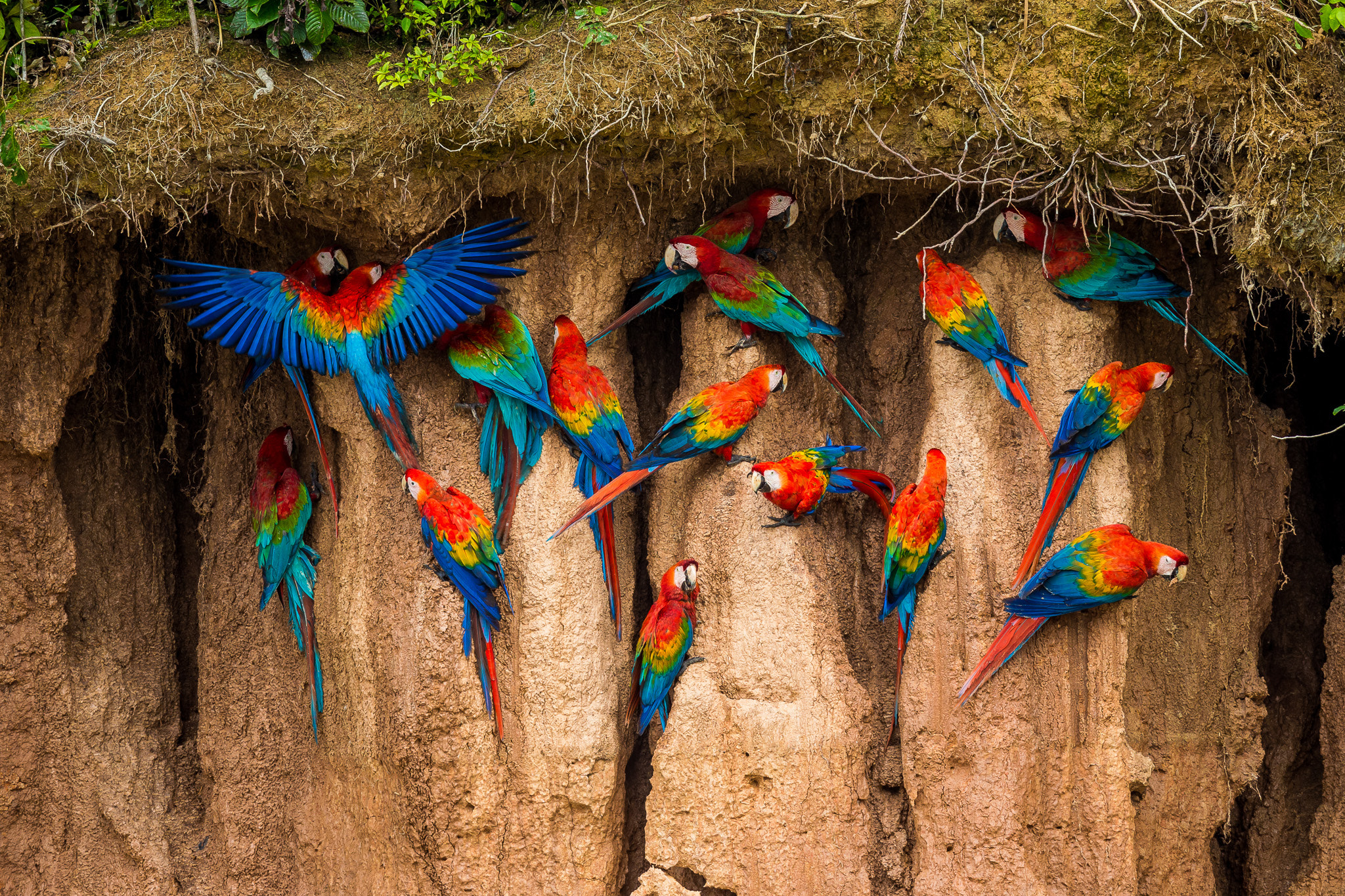
Butterflies are everywhere. Glasswings flutter along shady paths. Brightly colored Callicores and Panaceas stand out in open spaces. With luck, we may spot Blue Morphos gliding through the jungle. Wildlife watching in the dense rainforest requires patience, but the rewards are incredible.
For a change of pace, we can relax in the lodge’s garden and observe hummingbirds or wait for mixed-species bird flocks to pass by. A challenging hike takes us up to a lookout point at 920 meters, offering breathtaking views of the Amazon. This cloud forest area is one of the best places to spot the elusive Black Tinamou.
Day 7: Journey to Amazonia Lodge
We travel back up the Alto Madre de Dios River, arriving at Amazonia Lodge around 9 am. While our luggage is transported to the lodge, we walk the scenic 2 km Jeep Trail, where we may spot tinamous, trogons, Purple-throated Cotinga, Long-tailed Tyrant, and various parrots.
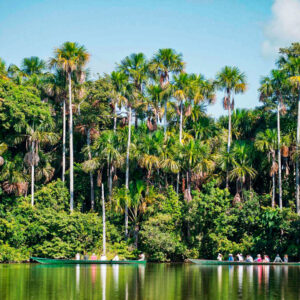
Amazonia Lodge features a beautiful garden, home to 6–10 hummingbird species, including the striking Rufous-crested Coquette and Wire-crested Thorntail. This is also a great location to observe one or more of the three potoo species. Nearby, a small oxbow lake provides a chance to see unique birds like the Hoatzin, Sungrebe, Sunbittern, and Rufescent Tiger-Heron—species rarely found at Pantiacolla.
Day 8: Return to Cusco
After a final morning walk around the lodge, we cross the river by boat, where our vehicle awaits. The drive back to Cusco takes 8–9 hours, with breaks for birdwatching, coffee, and lunch along the way.






 Soft drinks, bottled water, and alcoholic beverages




Reviews
There are no reviews yet.